
By March 2029, we will have prevented 25% of heart attacks and strokes in North West London, while actively addressing health inequalities.
North West London’s cardiovascular, renal and metabolic (CVRM) mission brings partners together so that people at risk of, or living with, these connected conditions are identified sooner and cared for as a whole.
Why this matters
Around 580,000 people in North West London, about 20% of the population, live with CVRM conditions. Together these conditions account for around 70% of all hospital admissions, and cardiovascular disease remains the largest single cause of premature death in the area.
These conditions are closely connected. High blood pressure, raised cholesterol, type 2 diabetes and chronic kidney disease often occur together, and each one raises the risk of the others. Treating them one at a time misses the fuller picture of a person’s health and leads to missed chances to act early.
The burden is not shared evenly. CVRM conditions are strongly linked to deprivation and to ethnicity, with South Asian communities in North West London at particularly high risk. Narrowing that gap is the point of the mission, not an addition to it.
Our mission
North West London has adopted a mission-based approach to tackle the health challenges that matter most to local people. Instead of running isolated projects, partners agree a small number of shared priorities and work on them together over several years.
The North West London Research and Innovation Board established the mission to optimise care for people with long-term conditions, starting with cardiovascular disease. It has since broadened to cover CVRM conditions as a whole.
The mission’s partners come from the NHS, industry, local authorities, communities and academia. As the health innovation network for North West London, we convene and coordinate that work. Through innovation, collaboration and system transformation, we turn shared priorities into practical change.
What we do
Our work is organised around two themes.
Identifying people at risk earlier
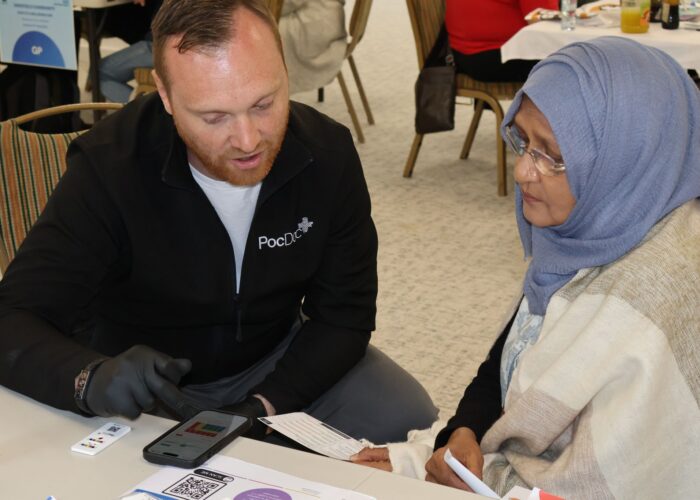
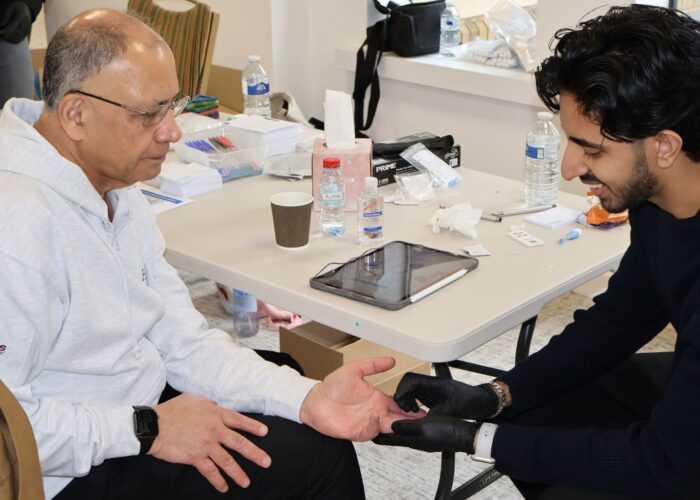
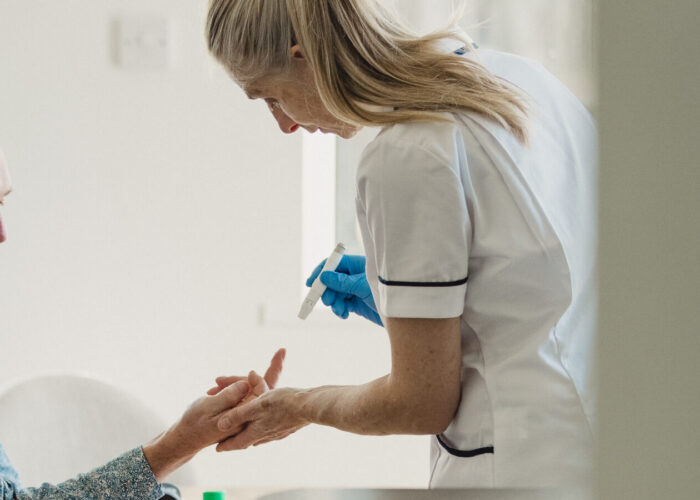
Many people live with undiagnosed CVRM conditions, or with risk factors that have not been picked up. Finding them sooner means treatment can start sooner, especially for people who are less likely to come forward through the usual routes.
This year we are:
Supporting more joined-up holistic CVRM management & care
When conditions overlap, care works better if it is planned around the person rather than around a single diagnosis. Our second theme is about making that the normal way of working across North West London.
This year we are:
Innovation and research
Innovation earns its place in the mission when it improves outcomes for people. That is the test we apply.
The mission is supported by patient partners, an innovation adviser and partners including the North London Cardiac Operational Delivery Network, London Million Hearts and Minds and the other London Health Innovation Networks.
Reducing health inequalities
This is a condition of the work rather than a separate workstream. Every programme in the mission has to show how it reaches the people at greatest risk.
We want to hear from NHS teams, local authorities, researchers, industry partners and community organisations working on CVRM conditions in North West London.
Email Clare Thomson, Innovation Lead, at clare.thomson@imperialcollegehealthpartners.com or sign up to our quarterly newsletter for regular updates.
We’ve spoken to NHS staff, patients and carers to better understand why optimising care for CVD in NW London is so vital…
Having only ever worked in a hospital pharmacy, I learnt a lot about primary care which was hugely beneficial and will certainly influence my working practices going forward. Having contacts in primary care and good working relationships can only benefit everyone going forward and in particular the patients
Collaborative working, for example via MDTs, integration between physical and mental health – we need a whole person approach. This is critical to cracking prevention.
I’d love us to have the same CVD care and outcomes wherever in this patch that you live. I’d love us to have access to the same treatments at the same time. I’d really love us to be at the forefront of research and innovation.