
From waiting for patients to turn up when something has gone wrong, to supporting people holistically with the multiple health challenges they face. In NWL, a mission-driven approach to cardio-renal-metabolic (CRM) health is showing what happens when the system decides to work differently.
“I was once given a gym membership and told to exercise more, but that doesn’t solve everything. It doesn’t take into account real-life challenges, like childcare or being a single mum, or what actually works alongside daily responsibilities.
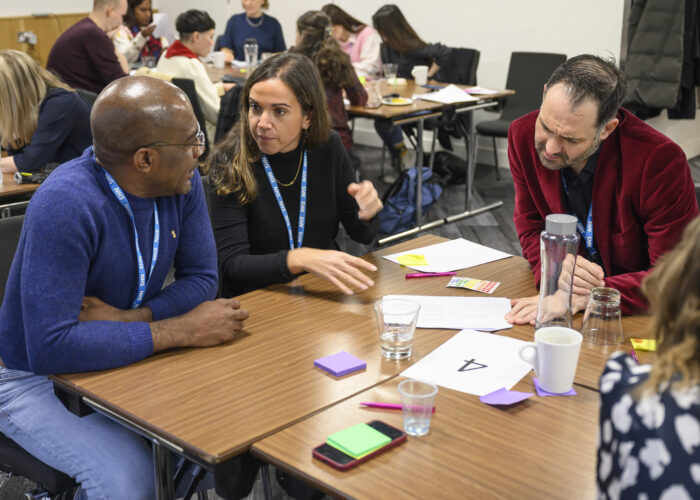
Hearing patient stories makes teams think more outside the box. That’s why it’s so important to have patients in spaces like the Innovation Forum, to show how different our lives are and to really reinforce that it’s not one size fits all. “ Ayọ̀ , Lived Experience Partner, NWL CRM Innovation Forum
Ayọ̀ spoke at the NWL CRM Innovation Forum, one of a growing number of lived experience partners whose voices are shaping how the system thinks about cardio-renal-metabolic care. Her experience of being given a gym membership when what she needed was someone to ask about her actual life is not unusual. It is, in fact, the gap that the entire CRM mission was designed to close. Around 580,000 residents of NWL are estimated to be living with CRM conditions. For years, the conventional approach has been to manage these conditions separately: one appointment for blood pressure, another for diabetes, another for cholesterol. It works reasonably well for the people who can show up. However, many people have interconnected conditions with the same risk factors and treating those conditions in siloes instead of holistically does not benefit the patient or staff.
Who the CRM mission is built for
Residents with CRM conditions do not arrive in a simple clinical category. They arrive as a person with a family, a job, a commute, a list of competing priorities and, often, a long history of feeling that the health system was not quite designed with them in mind.
“It’s about bringing new ways of working into the system. Not new technology – just a better way of doing things.”
Clare Thomson, Innovation Lead, ICHP
The Harrow model: a different kind of appointment
In 2024 the London Borough of Harrow co-designed, developed, and piloted a new model of cardio-renalmetabolic care to help tackle the rise of chronic kidney disease (CKD) and CVD events. Instead of the standard 10-minute GP appointment (see one condition, prescribe, move on), patients with two or more risk factors were offered two 30-minute slots. Time to talk about what actually mattered to them. Time to connect their diabetes management with their blood pressure, their weight, their lifestyle.
ICHP supported the design of what those clinics could look like, working alongside the clinical team to shape the model from the outset. The approach drew on personalised care and lifestyle medicine principles, training staff to have holistic conversations that went beyond individual conditions.
Crucially, the programme recognised that kidney disease sits at the heart of the CRM picture: early intervention in CKD, combined with better management of cardiovascular and metabolic risk, addresses one of the most pressing but least visible challenges in NWL’s primary care. What followed wasn’t just better patient experience, it was measurable clinical improvement. Weight came down. Cholesterol levels improved. Patients and staff were more satisfied.
The model worked.
- statistically significant reduction in BMI (-2.6 units)
- modest but significant changes in cholesterol measures
- 7.2 percentage points more likely to be prescribed SGLT2 inhibitors and 5.0 percentage points more likely to be prescribed ACE/ARB medications, indicating optimisation of cardiorenal-metabolic management (i.e. more likely to be prescribed best-practice medications)Impact Report 2025/26 I Testing and scaling 11.
What mattered equally was what happened next. In 2025/26, working with NWL ICB colleagues across the region, ICHP supported conversations that helped the Harrow approach shape thinking beyond one borough. An enhanced service specification, incorporating elements of the Harrow model, was developed by the NWL ICB. And through a pharmaceutical partnership, funding was secured to support more Primary Care Networks (PCNs) to deliver this new type of care.
Building capability across the system
Clinical change doesn’t happen just because a model works in one borough. It happens when clinicians across the system understand it, believe in it, and have the skills to deliver it. That’s why education and workforce development have been a core part of the CRM mission from the start.
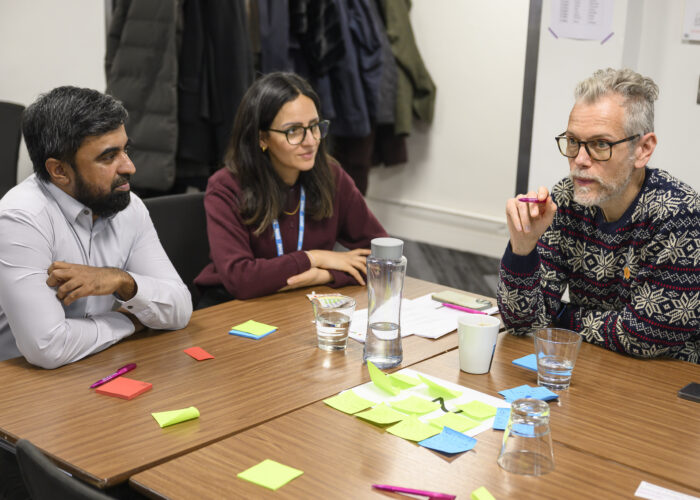
Around 350 staff have been supported through system-wide education and skills development, spanning webinars, non-promotional educational events supported by pharmaceutical partners, and hands-on clinical training. An Innovation Forum, held in February 2026, brought together around 75 people from across primary care, secondary care, public health, innovators, residents and the ICB to explore self-management and CRM care.
The goal is “collaboration, accelerating and embedding – really getting things embedded into business as usual,” as ICHP Innovation Lead, Clare Thomson, puts it. That is harder than it sounds in a system that moves fast and has limited bandwidth. But it is the only measure of success that really counts.
A movement, not a programme
The connections the mission has created extend beyond any individual workstream. Cross-borough conversations that wouldn’t otherwise have happened. A collaboration on evaluation design between NWL boroughs that is generating shared evidence neither could produce alone.
Conversations are also underway about a Londonwide CRM academy for clinicians – working with other London health innovation networks to explore whether training and learning can be pooled across the capital rather than developed independently in every patch. Sponsorship is being sought to support this. It is an aspiration in active development, not yet a confirmed programme.
“There’s a sense of us growing together and evolving,” Clare reflects. “The whole system is moving towards this CRM approach.”