
Author: Adam Ashworth, ICHP Innovation Lead
Safe, timely discharge from hospital is one of the most persistent challenges across the NHS. Every delayed discharge impacts patients, staff, and the wider health and care system – straining capacity, creating inefficiencies, and affecting the experience of those in our care.
At Imperial College Health Partners (ICHP), as part of North West London’s (NWL) mission-led approach to innovation, we’ve been working with partners to test solutions in real-world settings, evaluating impact rigorously, and generating insights that can be scaled across the system. In the last year we’ve been working closely with colleagues in Kensington & Chelsea (Chelsea and Westminster NHS Foundation Trust, Royal Borough of Kensington and Chelsea), and Hillingdon (The Hillingdon Hospitals NHS Foundation Trust, Hillingdon Council) to implement OPTICA – the Optimised Patient Tracking and Intelligent Choices Application. To contribute to NWL’s strategic goal to enable 50,000 residents to spend 180,000 more days at home where clinically appropriate, with the right support for them and their families
OPTICA – endorsed through the NHS Federated Data Platform (FDP) – is a secure, cloud-based application designed to provide NHS and Local Authority teams with a shared, real-time view of patients approaching discharge. The goal: to streamline coordination, reduce delays, and ensure patients receive the right care, in the right setting, at the right time.
Having tested OPTICA in real-world operational settings across NWL Acute Trusts and Local Authorities, we have undertaken a rigorous evaluation to understand its impact. The results speak to the value of partnership, data, and system-focused innovation.
What we’ve learned
OPTICA delivers tangible benefits for patients, staff and the NWL system:
- For patients: In Hillingdon, unnecessary bed days fell by 23%, freeing capacity and improving patient flow.
- For staff: Real-time visibility and reduced administrative burden freed 990 staff hours at Hillingdon alone, enabling teams to focus on direct patient care rather than administrative tasks. Staff reported increased confidence in discharge planning and better collaboration across organisations.
- For the system: Coordinated data-sharing and process alignment accelerated decision-making, reduced variation, and provides a blueprint for scalable, cross-sector improvement. In Hillingdon, an estimated cost saving analysis concluded that, annually, savings could include £62,675.63 from improved efficiency and reduced administration burden, with additional savings potential from improved length of stay and workflow enhancements.
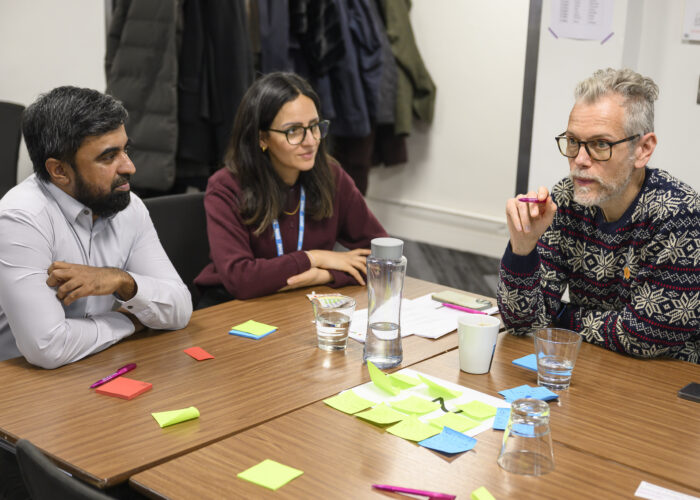
Beyond the numbers, this work highlights the power of partnership and frontline engagement. The success of OPTICA’s implementation was dependent on clinicians, operational leads, and Local Authority colleagues working together to identify challenges, test solutions, and iterate improvements.
What we’re sharing
We’ve published three complementary resources to support the wider adoption of OPTICA across NWL:
- Evaluation Report: A rigorous review, with real-world data and qualitative insights, of the impact of implementing OPTICA
- Scaling Toolkit: Practical guidance to replicate this impact across other hospitals
- Lessons Learned: Reflections on what works and what challenges remain
These outputs provide evidence alongside tangible guidance and recommendations, that we hope teams across NWL and beyond can use to improve flow, reduce variation, and enable cross-organisation and cross-sector collaboration to provide the best care for patients.
Why this matters for our system
This work demonstrates that sustained innovation is about more than technology. It requires:
- Integrated data and digital tools to make information visible and actionable.
- Collaborative leadership across health and social care organisations.
- Rigorous evaluation to generate credible evidence that can guide scale.
OPTICA is a case study in how NWL’s mission-based approach to innovation (testing, evaluating, and scaling) can deliver system-level transformation. It shows that with the right combination of tools, insight, and collaboration, we can tackle one of the most entrenched challenges in the NHS: delayed discharge. Ensuring that patients are discharged from hospital to return home or to an appropriate care provider, more quickly and effectively.
What comes next
Whilst the positive impact of implementing OPTICA is clear, there is still more to do. Data accuracy, interoperability, and consistent access across partners, remain challenging. But the path forward is clear.
To build on this work at NWL Implementation Sites, we recommend:
- A plan for scalable roll-out: A structured roll-out strategy should prioritise Local Authorities based on readiness and potential impact. Organisational barriers must be addressed through clear alignment with provider objectives and staff engagement.
- Design around user needs: OPTICA’s development should be guided by frontline experience. Co-design workshops, usability testing, and real-time feedback loops will ensure the system remains responsive to operational realities and local variation.
- Embed evaluation and continuous improvement : A rolling evaluation cycle – incorporating analytics, staff feedback, and patient reported outcomes – will support ongoing refinement. Independent benefits realisation reviews will help validate impact and inform future investment.
Read our full set of recommendations in the Evaluation Report.
With the right support, this innovation supporting timely discharge is ready to scale across all acute sites and Local Authorities in NWL.
A case study in collaboration
The success of OPTICA has only been possible thanks to the collaborative, partnership-driven approach to innovation we’ve taken in NWL.
For colleagues across NWL and beyond: the insights from this work are ready to be applied, adapted, and scaled. Together, we can ensure more patients spend the right amount of time in hospital, freeing capacity, enhancing staff experience, and improving outcomes for everyone in the system.
To those who’ve been part of this journey: thank you. The insights and experiences of our clinical and operational colleagues, across acute sites and adult social care teams, have laid the foundation for change in NWL. Now it’s time to go further, together.
Ready to implement OPTICA at your organisation?
For more information, email Mission Lead, Adam Ashworth: adam.ashworth@imperialcollegehealthpartners.com