
For thousands of children across North West London (NWL), the wait for a neurodevelopmental (ND) assessment can be years. A new approach – one that puts support before diagnosis, and children before bureaucracy – is changing that.
The week of the NWL ND Needs Profiling Innovation Forum in February 2026, a new government white paper, ‘Every child achieving and thriving’, on neurodevelopmental support landed. For many parents of children with ADHD, autism, and other neurodevelopmental needs, it brought more anxiety, more uncertainty, and a familiar sense of being buffeted by change rather than feeling progress.
Carol Foyle, parent representative, arrived at the forum feeling that weight. She left feeling lighter, and more hopeful that good change is on its way. That feeling was the result of months of careful, deliberate work, mapping the system’s pain points, designing a new approach to neurodevelopmental support, and building the coalition of clinical, educational, and community partners needed to make it real.
A broken system and why patching it is not enough
NWL’s ND waiting list continues to grow, with more than 8,000 children and young people waiting for assessment. While non-recurrent funding can temporarily reduce the backlog, demand quickly returns.
The challenge is structural. Many children and young people do not need a diagnosis to access school support, benefits or help at home, yet families often feel it is the only route to getting support.
“The system reinforces a situation where families feel they need a diagnosis in order to access support,” says ICHP Innovation Lead Catherine Fraher. “What we’re trying to do is change that.”
In response, North West London is taking a two-pronged approach: improving the existing diagnostic pathway while expanding early support options that help families get the support they need sooner, reducing demand for assessment where it is not required.
Branch one: Neurodevelopmental pathway solution
A digital tool that streamlines and automates the referral and assessment pathway, removing unnecessary administrative tasks such as manual questionnaire scoring, chasing information from schools and GPs, and managing ineligible referrals. This frees clinicians to focus on assessment and support, while giving service managers real-time oversight of pathway performance.
Designed to fit existing processes, it integrates with multiple electronic patient record (EPR) systems rather than requiring infrastructure changes. Go-live is planned for Autumn 2026, with evaluation in early 2027.
At a glance:
- Automates and digitises the referral and assessment pathway
- Reduces administrative burden, freeing clinicians and frontline teams to focus on care and support
- Works alongside existing pathways and integrates with multiple electronic patient record (EPR) systems
- Provides service managers with real-time visibility and oversight
- Go-live: Autumn 2026
- Evaluation: Early 2027
Branch two: Needs Profiling – shifting where support begins
A needs-led approach that focuses on support rather than diagnosis as the starting point. Young people, their parents or carers, and school Special Educational Needs and Disabilities Coordinators (SENDCo) work together to identify strengths, unmet needs and the support required, creating a holistic needs profile and practical action plan.
Clinical assessment remains available where it adds value, but early evidence suggests many children and families benefit from earlier support without entering a diagnostic pathway. NWL will pilot a fully evaluated, technology-enabled model, capturing outcomes from day one. Go-live is planned for the end of 2027.
At a glance:
- Needs-led conversation involving the young person, parents or carers, and school SENDCo
- Provides practical support without requiring a diagnosis first • Pioneer sites have reported indicative reductions in new referrals of up to 40%
- North West London will pilot a fully evaluated, technology-enabled approach
- Pilot go-live: End of 2027
From forum to pilot: a shift in mood before a shift in system
The NWL ND Needs Profiling Innovation Forum, held in February 2026 was designed to test whether the system was ready for this change. The answer was unambiguous.
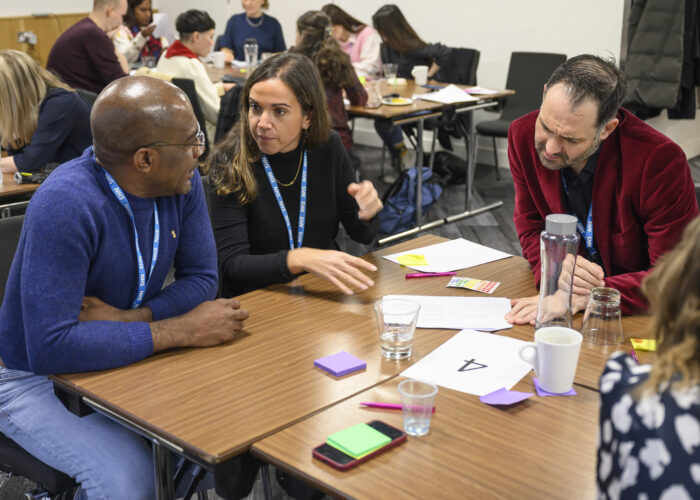
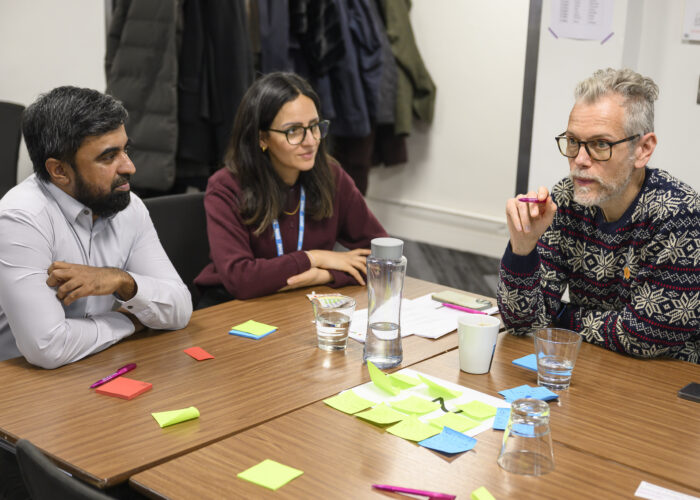
Eighty-two leaders from across NWL’s health, education, local authority, and voluntary sectors gathered at the end of a week in which the government’s ND White Paper had unsettled and energised in equal measure. The forum was deliberately structured around borough tables, so the question of whether to pursue ND profiling was answered collectively – by the people who would have to deliver it. Every table clustered towards “explore this here.”
“I thought we were going to get quite a spread of votes,” Catherine recalls. “I was wrong. They all clustered near 10.” The feedback that followed – from clinical leads, parent representatives, heads of inclusion and NWL ICB directors – was more than professional endorsement: families who’d felt the weight of the white paper came away believing change was possible, clinicians came away with a shared direction, and the system felt like it was creating momentum.
So, what comes next
NWL boroughs are moving towards readiness to pilot Needs Profiling, and ICHP’s commitment of significant funding – to develop the pilot design, scope the evaluation and technology, and build the business case for sustained change – has helped unlock further investment across the system.
The technology matters too: no formally evaluated, fully technology-enabled Needs Profiling tool yet exists, so NWL intends to build one – letting the young person shape and edit their own profile, the school SENDCo review and contribute, and outcome data reveal, for the first time, the pattern of unmet needs and which support has the greatest impact. That evidence base does not exist yet; NWL will create it.
The pathway solution goes live Autumn 2026; the profiling pilots will be supporting children and young people in their schools by the end of 2027. The evaluation includes generating real-world evidence to shape neurodevelopmental support not just in NWL but across London and beyond.
“That is what our job is: to understand a problem and the theory of change. To use that to map out where the energy is, who is pushing the different levers, and to connect them. To build the energy and the belief that change is possible.” Catherine Fraher, Innovation Lead, ICHP