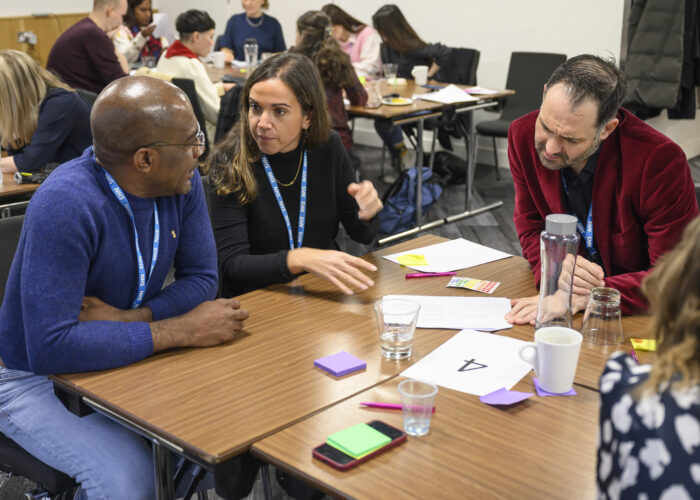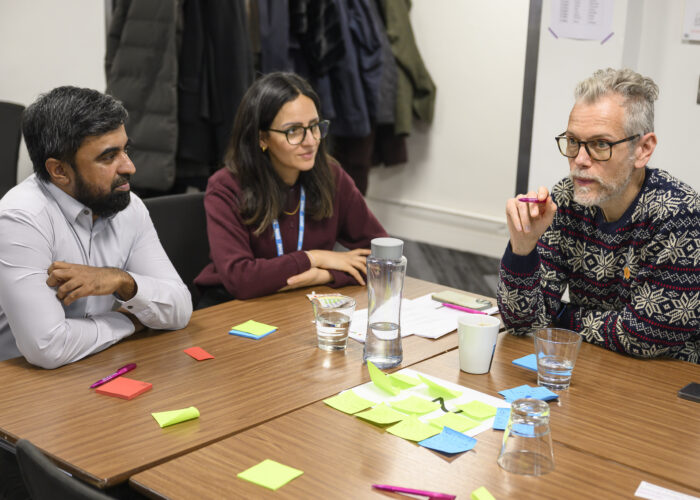

The clearest direction for North West London’s obesity mission did not come from a boardroom or a strategy document. It came from listening to 37 residents from across all eight boroughs sharing what it actually feels like to live with obesity, and what support could make the greatest difference. Those discussions set the mission’s focus and its priorities.

Why obesity, and why now
Obesity is not a new problem. Around 600,000 residents in NWL are living with it. It costs the NHS more than £11.4 billion annually. It is growing. And it is not evenly distributed: Our most deprived communities – the national Core20 group defined by NHS England as the 20% most deprived areas – in NWL are nearly twice as likely to be affected, and Black residents face significantly higher prevalence than white counterparts. If a health challenge demands a mission response, obesity is it.
There is also something new in the landscape. GLP-1 medications are generating significant attention, and rightly so. Tech-enabled weight management platforms are changing how people engage with support. The evidence base on what works, in clinical settings, in communities, in the conditions that shape people’s environments, is developing rapidly. NWL has both the need and, through its data infrastructure and system partnerships, the capacity to be at the frontier of what comes next.
The NWL Research and Innovation Board’s decision to focus ICHP’s next mission on obesity was not just a recognition of the scale of the problem. It was a signal that NWL intends to approach it seriously, rigorously, and in a way that generates evidence and momentum that can travel beyond NWL.
“Obesity aligns strongly with our system’s priorities and with what matters locally to residents, clinicians and partners. That’s why it’s been selected as NWL’s next Mission.”
Adam Ashworth, Innovation Lead, ICHP
A different kind of mobilisation
Building a mission from scratch takes time, but it doesn’t have to take long. In the space of four months (January – April 2026), ICHP mobilised a programme of evidence-gathering, stakeholder engagement and resident deliberation that would, in a less agile system, have taken years.
The resident deliberation was the culmination of all of this. It mattered not just as a final step but as a statement of intent: the mission’s focus would be shaped by the people whose lives it is designed to improve.
“This wasn’t a consultation or a workshop”, Adam Ashworth, ICHP, reflects. “It’s shared decision-making. We brought together a balanced cross-section of NWL, people living with obesity, carers and parents, residents affected by long-term conditions, communities most affected by inequalities, and asked them to help us determine where change could make the greatest difference”.
The discussions were open, thoughtful and, at times, challenging. They covered stigma, access to services, the social and environmental conditions that shape weight, and the gap between what clinical settings can offer and what people’s lives actually look like. The insights from the deliberation will directly shape the mission’s focus as it moves into its discovery phase.
Articulating the goal of the mission
The mobilisation phase culminated in the agreement of a clear, shared and ambitious mission:
By 2030, stop the rise in obesity in North West London and set it on a sustained path towards reduction, starting where need and inequality are greatest.
This goal signals a collective commitment to long-term change. It recognises both the scale of the challenge and the urgency of acting now, while grounding ambition in equity, prioritising those communities most affected by obesity and its consequences.
To give this mission practical focus, three priority themes were agreed to guide the next phase of work:
- Children and young people family-based prevention – reflecting the importance of acting early and supporting families in ways that fit with real life.
- Equitable access to weight management services, addressing long-standing gaps in availability, experience and outcomes for different communities.
- Access to GLP-1 treatments with wraparound care, recognising the growing role of pharmacological interventions when they are delivered safely, ethically and alongside holistic support.
These priorities are a direct reflection of what residents told us during the deliberation process. Residents spoke powerfully about the pressures facing families, the lack of awareness and challenges of accessing services, and the frustration of being unable to access available treatment on the NHS. They called for prevention to start earlier, for services to be easier to access and better joined up, and for new treatments to be introduced responsibly, with care, information and support around them. The mission statement and its themes translate those lived experiences into a clear system-wide direction.
With the mission goal and themes now agreed, the work moves into a Discovery phase. Each of the three themes will be taken forward to explore where innovation can have the greatest impact and how the system can act differently in practice. This discovery phase will continue the partnership approach established during mobilisation, bringing residents together with clinicians, local authorities, voluntary organisations, industry partners and innovators.
From delivery vehicle to orchestrator
There is something worth saying about how this mission is being built differently from those that came before. The early NWL missions used a top-down model: important people with authority set the direction, ICHP delivered. It generated results, but it also meant ICHP carrying a weight it could not sustain alone. The mission model works when the system shares the ownership, not when one organisation carries it for everyone else.
This new mission is being designed from the outset with shared ownership at its centre. ICHP is the orchestrator and convenor. Our mission team will deliver some of the work. Others in the system will deliver some of it too. And ICHP will actively support things happening in the system that serve the mission’s goals – even when ICHP isn’t the one leading them.
That is a significant shift. It is also, Adam believes, the only sustainable model for work at this scale. “It’s about us together realising these goals and supporting each other to be able to deliver on the issues and initiatives that are important to us.”
The commercial opportunity
Obesity is also a space that is attracting significant commercial interest. The challenges are real, the scale is enormous, and the innovation potential, from GLP-1s to digital therapeutics to populationlevel behaviour change approaches, is genuine.
ICHP’s invitation to commercial partners is direct and explicit. ‘Our door is not only open but actively wanting to invite people to come and talk to us,’ Adam says. He comes from a pharma background in strategic partnerships, and he understands what commercial organisations need: evidence that is credible, a system that is genuinely embedded, and a partner that can help their innovations reach the patients who need them.
NWL’s linked Discover dataset makes ICHP a compelling evidence partner for obesity innovation. The ability to track outcomes across the full care pathway, across NWL’s diverse and complex population, is not something most systems can offer.