
In 2025/26, North West London was named the best-performing region in England for identifying hypertension. It took four years, two rejected business cases, a government restructure, and one team that refused to walk away.

Start with the result
In 2025, North West London (as of March 2025) is the best performing Integrated Care Board (ICB) for all age controlled blood pressure. Whilst this is a collective achievement for all of primary, community care and residents, a significant contributor to that achievement has been the Clinical Effectiveness Group (CEG), launched in 2024. Its go-live is the result of hard, focused work across several organisations, and the system being willing to learn about what has worked elsewhere.
Hypertension, high blood pressure, affects a significant proportion of the adult population and is one of the leading risk factors for heart attack and stroke. Many people who have it do not know. Finding them, and ensuring the people who are already diagnosed are getting the best possible care, is exactly the kind of work that falls between the gaps of a system organised around acute episodes rather than proactive management.
The CEG closes that gap. Modelled on an approach that originated in North East London and spread to South East London, it brings together GPs to focus on a question the system often neglects: for the patients we already know, are they receiving the best possible care? Structured reviews of medicines, care pathways, and clinical outcomes generate improvements, not through new technology or new funding, but through applying clinical judgment systematically, at scale.
How ICHP made it happen
ICHP did not build the CEG model. It spotted it, made the case for bringing it to NWL, and sustained that case over four years of institutional friction.
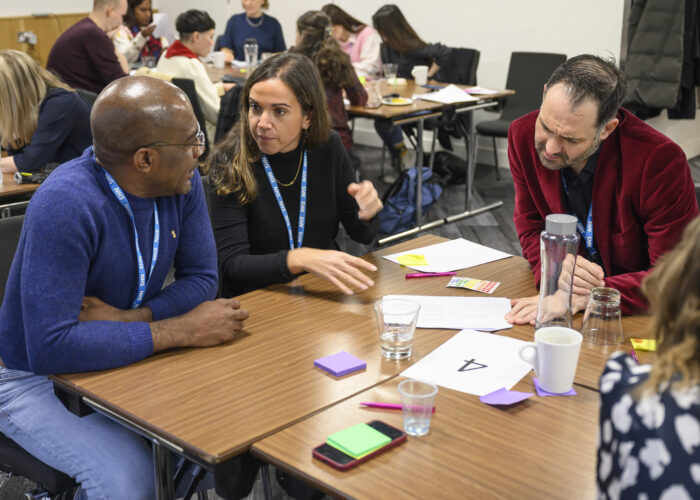
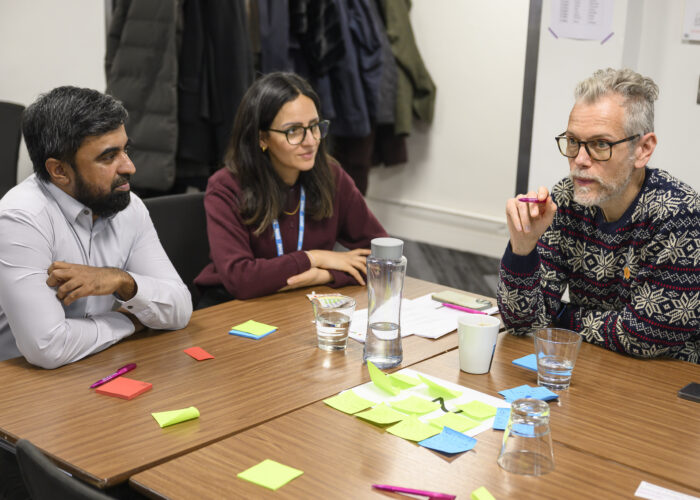
The story begins in 2022, with a workshop ICHP convened to introduce the CEG model to NWL. The meeting brought together system colleagues and invited counterparts from North East and South East London – places where the model was already running and generating results. The response in the room was positive.
Two rejections and a restructure
The first business case was rejected in 2023. NWL ICB commissioned PPL (a management consultancy specialising in NHS commissioning) to work alongside ICHP to develop a second iteration of the business case, which was eventually approved. Then the government announced the reform that would reshape ICBs across the country, and the plan to host the CEG team at NWL’s ICB fell away.
Central North West London NHS Trust (CNWL), one of ICHP’s member organisations and a community provider, stepped in to take the hosting role. The team that emerged was smaller than the original business case had envisaged. But it had something that mattered more than size: the right clinical lead.
Reflections on why it took so long
The CEG model was proven. North East London had the data. South East London had adopted it. The case for NWL was clear to almost everyone involved.
And yet it took four years from the first workshop to the CEG running at pace. Two business cases. A hosting plan that fell through. A team smaller than originally designed.
This is not a story about failure. It is a story about what happens when the NHS tries to fund work that improves care for people already in the system, rather than treating acute illness. There are no clear mechanisms. The incentives point elsewhere. Good ideas require champions with staying power.
ICHP was that champion. That tenacity, rather than any single piece of work, may be the most transferable lesson here.
The clinical lead who made the difference
Dr Perviz Asaria was appointed as the CEG’s clinical lead. ICHP Director, Matthew Chisambi, is direct about the significance of this appointment: the right person, with the right expertise and the right relationships in NWL’s primary care community, was the condition that made everything else possible.
The CEG model works because GPs trust it. That trust is not given automatically to a new programme, however well-designed. It is earned by clinical leaders who understand the pressures of primary care, who can speak the language of their colleagues, and who can make the case for structured quality review in terms that resonate in a busy practice.
Dr Asaria brought that credibility. And the results, nine months in, reflect it.
What the results mean and what it asks
Being the best-performing region in England for hypertension identification is not an end point. It is a baseline. The question the result raises is: what is possible if this model is sustained, properly resourced, and extended?
The CEG’s focus is not only hypertension. Structured reviews of medicines and care pathways can be applied across a range of conditions where the gap between what is known and what is delivered is significant. The infrastructure is now in place. The credibility is established. The clinical lead and the team are in post.
ICHP’s role going forward is the same as it has always been in this work: not to deliver, but to support the conditions for delivery. To make the case for sustained investment. To connect NWL’s experience with the national conversations about how the NHS improves care for the patients it already has, rather than only finding the ones it is missing.