
Jess Horne, Senior Innovation Manager, shares why getting all parts of the system (and beyond) together is a crucial step in transforming mental health care for children and young people in North West London

The challenge of aligning a fragmented system
When we talk about system transformation in children and young people’s (CYP) mental health, it’s easy to feel stuck in the complexity that comes with so many organisations influencing, shaping, and supporting the wellbeing of children and young people. Progress can’t come from one perspective alone. So, how do we bring everyone together around a shared purpose, and move forward to transform the system as one?
At Imperial College Health Partners, through North West London’s (NWL) mission to support CYP’s mental health, we’ve focused on a simple, practical response: convene the system in person around a shared purpose and use that moment as a launchpad for real change.
At the end of February, we hosted the Neurodevelopmental Needs Profiling Innovation Forum. What unfolded in the room was a reminder of what’s possible when convening is intentionally designed with a clear outcome in mind.
Neurodevelopmental (ND) services are under huge pressure
In 24/25, more than 6,500 children and young people were waiting for ND assessment across NWL, with over 9,000 new referrals each year. Both figures are increasing at 12–13% year on year. Delays in meeting need can worsen mental health outcomes and add pressure across the system. National reviews consistently call for a “left shift”: earlier, needs-led support for CYP rooted in schools and communities. Yet current pathways can unintentionally drive demand and frustration by placing diagnosis at the centre, rather than support.
The Needs Profiling approach offers an alternative:
- Holistic assessment of strengths and needs, leading to a practical support plan via a resource hub for the CYP and their families
- A guided conversation involving the CYP, their family and the school
- Regular school–parent–multidisciplinary expert reviews, with clear escalation where specialist assessment, risk or crisis support is needed
This is an approach where education, health and families are aligned, enabling children and young people to get the right support earlier, reducing fragmentation and preventing escalation.
Why convening in person still matters
This wasn’t a conference designed for passive listening, it was a working forum: a space intentionally created for boroughs and partners to deliberate, listen, and learn from each other and to explore what change could look like if we moved together as a system.
The forum brought together 82 neurodiversity leaders from across all eight NWL boroughs, including:
- Health leaders, from trusts and the Integrated Care Board (ICB)
- Local authorities
- People with lived experience – parents and carers
- Schools and education leaders
- Voluntary, community and social enterprise (VCSE) organisations
- Innovators and technology partners
- Voluntary, community and social enterprise (VCSE) organisations
- Innovators and technology partners
What made the difference was the mix of perspectives in the room. Conversations were richer, more grounded, and more honest because no single part of the system was speaking in isolation. Health could hear directly from schools, local authorities could test ideas alongside parents, carers and VCSE partners, and innovators could understand the real constraints and opportunities, on the ground.
That cross-sector engagement shifted the energy in the room, from frustration to possibility.
Carol Foyle, the Parent Participation Coordinator for Brent Parent Carer Forum reflected afterwards:
The forum was about embracing collaboration. By stepping out of our silos and challenging preconceived narratives, we create an environment where the system can truly work for all and unite around a common purpose.
Engaging schools: building partnerships for system change
One of our earliest challenges was reaching organisations where relationships weren’t yet established, especially schools. We took a deliberate two-pronged approach: we mobilised existing school contacts across NWL, and followed up with direct outreach to academies and local school trusts by phone and email.
In these conversations, we were clear on the purpose of the work and why school participation is essential. Referencing the alignment of this work to the newly released schools’ white paper on SEND reform (national shift towards earlier, needs-based support) helped speak directly to the pressures schools are managing. The result was school participation in every borough, including headteachers and SEND specialists.
Turning talking into a true mandate for action
System forums can sometimes create great conversations, but little change. We were clear from the outset that this one needed to end with direction and momentum.
Across every borough table, participants were asked a simple question: is this something you would like to actively explore locally? The response was striking:
- Votes clustered at 10/10 across all borough tables to pursue Needs profiling
- 71% of NWL attendees (48 of 68) formally signed up on the day to help take this work forward
The forum generated not just agreement, but belief: that change is possible, partners are aligned, and no single borough should solve this alone.
Learning from other areas, innovating locally
Another strong theme from the day was the importance of local partnership and the value of learning from elsewhere.
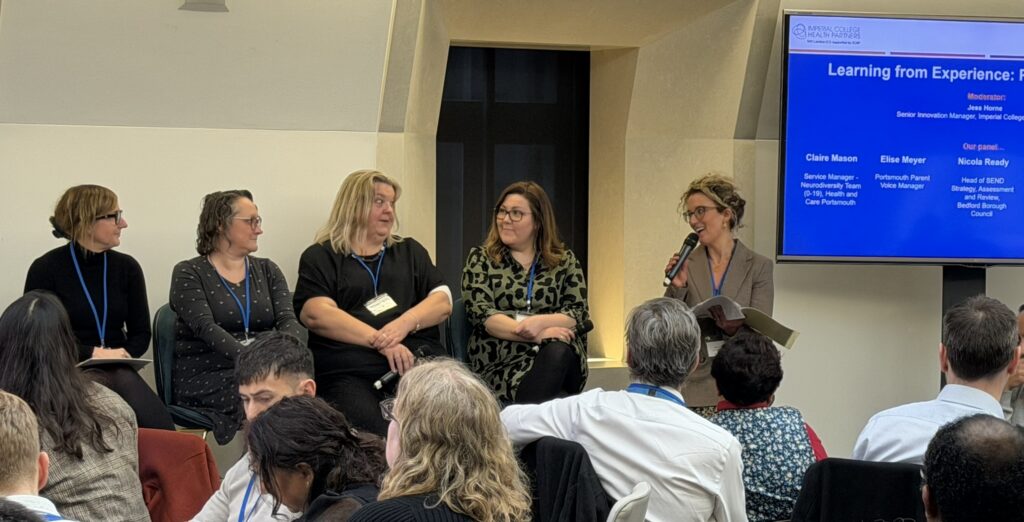
Pioneers from Portsmouth, Cambridgeshire and Bedfordshire, (including parents and staff from both trusts and local authorities) each of whom have already rolled out Needs Profiling in their cities and towns, joined the forum to share their experiences through a panel discussion and Q&A. These teams are now actively collaborating with colleagues in NWL, openly sharing what has worked, what hasn’t, and how pathways can be adapted to meet the needs of local populations.
The forum itself was shaped through a strong local partnership with Brent. Leaders from health, education, the local authority, and parent carer groups came together – led by consultant paediatrician and ICHP clinical fellow Deborah Bird – to explore this approach in depth. Over many months, the Brent working group researched Needs Profiling from every angle: examining variations across different areas, funding and governance models, the tool, and the experience for families.
The forum opened with a powerful and well-grounded showcase from Brent, rooting the day in real insight and opportunity from a local North West London perspective.
What happens next
We are now:
- Developing a detailed business case for Needs Profiling pilots across NWL
- Confirming funding and resource commitments from ICB, trusts and local authority partners to support the pilots: £325,000 has been committed so far
- Working with boroughs, schools and innovators at virtual roundtables to design and evaluate local pilot projects
This is just the beginning, but the mandate is there and commitment is growing.
A final thought: Where health innovation networks (HINs) add value
This forum is a strong example of the role HINs can play in system change.
Our contribution isn’t just ideas or funding in isolation; it’s the ability to:
- Convene the right people across boundaries
- Create safe, purposeful spaces for honest system-level dialogue
- Translate collective ambition into concrete next steps
- Back innovation with resource, expertise, coordination and evidence
Real system change doesn’t start with another report. It starts when the system comes together and commits to act.
If you’re interested in learning more or exploring how this approach could work in your area, we would love to hear from you.