

Adam Ashworth, Innovation Lead, shares how the region is standing up a new mission on obesity, working collaboratively and at pace.
Reimagining how we tackle obesity isn’t just a title, it’s the mindset that’s shaping every step of our mobilisation of North West London’s (NWL) next mission for research and innovation. This quarter, our region has come together around one of the most complex and consequential challenges we face: obesity. It is a challenge that touches prevention, equity, community infrastructure, long‑term conditions, lived experience, and the environments people navigate every day.
Meeting this challenge demands that we work differently: with curiosity, humility, and an approach that is built with and for our residents. What I feel most passionately about is not only the scale of what we aim to achieve, but how quickly and collaboratively we’ve been able to mobilise behind it. This is mission‑led working maturing in real time: faster, more inclusive, and more ambitious than when we began in 2023.
Why Obesity, and why now?
The case for action is clear. Obesity is a national health emergency, affecting one in three adults and costing the NHS more than £11.4 billion annually. In NWL alone, prevalence is high and rising, with stark inequalities between communities: older adults in our most deprived areas are nearly twice as likely to be obese as those in our least deprived, and Black residents face significantly higher prevalence than white counterparts.
This is also a moment of rapid innovation: tech‑enabled weight‑management platforms are changing how people engage with support, alongside growing awareness of GLP-1 medications and their role in weight management. Yet, the conditions that shape obesity, housing, transport, local retail environments, economic pressures, social norms, require us to think beyond clinical interventions alone.
Obesity aligns strongly with our system’s priorities, with the NHS Long Term Plan, and with national ambitions around Cardiovascular Disease and healthy weight. But crucially, it aligns with what matters locally to residents, clinicians and partners. That’s why it’s been selected as NWL’s next Mission.
A mission built on collective ownership
Our objective in this mobilisation phase is simple: to evidence and define the mission’s focus and goal. But how we do that matters just as much as the output.
This phase is intentionally short, sharp, and agile, designed to bring the system together at pace, rigorously test the evidence, and make a clear, timely decision on where our Mission will focus. We are embracing the principles that underpin all our missions:
- Collective accountability from day one
- Inclusive, bottom‑up engagement across residents, clinicians, VCSE partners, innovators, and local authorities
- Systematic thinking about funding and partnerships
- A willingness to be bold, making decisions quickly
Perhaps the most significant evolution in our approach is the introduction of resident deliberation at the heart of our decision‑making.
Stakeholder roundtables: Our evidence engine
Across the last month we’ve rapidly convened a targeted programme of stakeholder roundtables bringing together frontline clinicians, VCSE organisations and digital innovators in the med-tech space.
The sessions were designed as open, engaging conversations, creating space for participants to share reflections, challenge assumptions and contribute ideas from their own experience of tackling obesity across North West London and more broadly.
Each roundtable brought together a different perspective on the challenge, allowing us to explore obesity through multiple lenses. The format encouraged honest discussion and the sharing of practical experience, helping us test the emerging themes against the realities of delivery and identify where there may be opportunities for collaboration as the mission develops.
The conversations surfaced the realities of delivery, the constraints and enablers across pathways, and the innovations with genuine potential to scale. Combined with our desk research and interviews, these insights form the backbone of our obesity evidence base, providing the grounding our deliberation and decision‑making needs.
Putting residents at the centre of the mission
For the first time, we asked residents not simply to share views but to help shape the Mission’s focus through a structured, deliberative process. This included:
- Engaging meaningfully with evidence
- Reflecting on lived experience
- Prioritising potential areas of focus
- Understanding system constraints and feasibility
- Considering where change could make the greatest difference
This wasn’t a consultation or workshop, it’s shared decision‑making. We brought together a balanced cross‑section of NWL, people living with obesity, carers and parents, residents affected by long‑term conditions, and communities most affected by inequities. This group considered what the evidence tells us, what matters most to local people, and which changes could have the biggest impact over the long term.
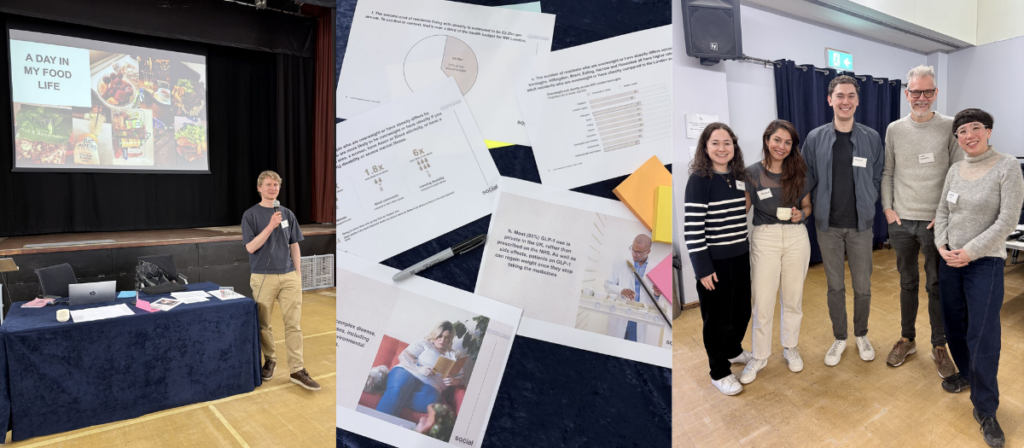
Bringing together around 40 residents from across North West London’s eight boroughs, the resident deliberation marked a powerful moment in the mobilisation phase. After weeks of desk research, stakeholder interviews and roundtable discussions, it was incredibly valuable to bring that combined insight into a shared space and test it against lived experience.
The deliberation brought together a diverse group of residents, each bringing different perspectives, experiences and relationships with weight, health and services. Through a structured process, participants were supported to engage with the evidence, reflect on their own experiences, and consider the perspectives of others before forming a view.
Throughout the day, residents explored each of the proposed mission themes in depth, reflecting on what matters most, where change could make the greatest difference, and how different approaches might work in practice. The discussions were open, thoughtful and at times challenging, covering issues such as access to services, stigma, and the wider social and environmental factors that shape health.
What stood out was the richness of the conversations and the willingness of participants to engage not only with the evidence, but with each other’s experiences.
The event marked a clear shift from gathering insight to shared decision-making, making sure the mission is shaped not only by system perspectives and evidence, but by the people it is ultimately designed to support.
The insights gathered from the resident deliberation event will directly shape the focus of the Obesity Mission as it moves into its discovery phase from April. Alongside insights from our stakeholders and evidence base, they will inform the final decision this spring.
A mission built for North West London
By the end of this collaborative mobilisation phase, we will have:
- A clear mission statement
- Prioritised themes for the next phase
- Clarified problems to solve and opportunities for innovation
- Measures to track impact
- A Discovery plan with governance, methodology, and decision‑making steps
But more importantly, we will have a shared ambition shaped by residents, validated by stakeholders, and energised by the urgency of the challenge ahead.
Looking to the future
Obesity is not a challenge any single organisation, or sector, can solve. It demands a mission that unites clinical expertise, community insight, innovation, local leadership, and lived experience. What we’re doing in this mobilisation phase is laying the foundations for that collective effort.
We are moving faster, engaging more inclusively, and thinking more ambitiously than ever before. If the early momentum is anything to go by, this Mission has the potential to unlock meaningful, systemic change for the people of NWL.
Want to learn more about NWL’s mission-led approach to Obesity?