

Reflections and impact from a pan-London event to support perinatal optimisation in maternity and neonatal services.
Background
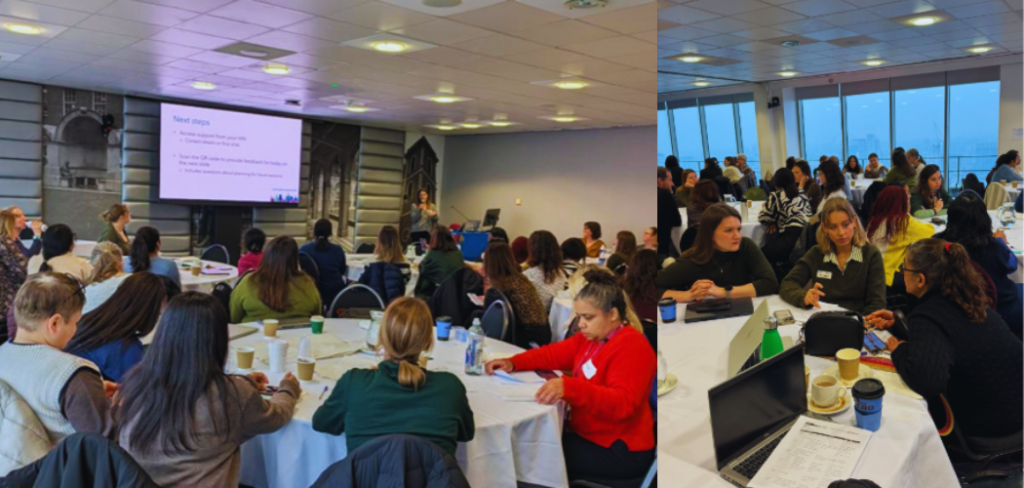
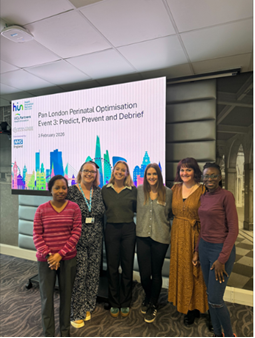
In February 2026, a pan-London event was collaboratively hosted by the three London health innovation networks (HIN), (Health Innovation Network South London, University College London Partners (UCLP) and Imperial College Health Partners (ICHP), as part of the perinatal optimisation workstream.
These events form part of the support offer in Perinatal Optimisation that the London HINs provide to their local Maternity and Neonatal services through their Maternity and Neonatal Safety Improvement Programme Teams commissioned by NHS England as part of the Patient Safety Collaborative.
This work supports the delivery of the NHS England HIN commission within the Maternity and Neonatal Safety Improvement Programme Teams as part of the Patient Safety Collaborative.
The target audience of the event is the Perinatal Multidisciplinary teams working on the Perinatal Optimisation pathway in their organisations.
The aim of offering this learning experience is to provide an environment for shared learning, networking and ultimately sharing best practice to be taken back to Trusts to improve the care outcomes for women, birthing people and their families.
The event invitation was shared widely across key London stakeholders using individual HIN networks and previous event attendee dissemination lists to encourage attendance from a diverse audience.
Project aims
The Perinatal Optimisation workstream aims to improve the outcomes for babies born prematurely (born before 34 weeks gestation) via interventions through the antenatal, intrapartum and neonatal aspects of the childbearing journey. The aims of the programme are to directly reduce perinatal morbidity and mortality, specifically preventing brain injury, lung injury and other long-term health conditions and disabilities that are more likely to occur in children that have been born prematurely (British Association of Perinatal Medicine).
These events have a strong history of providing opportunities for London-wide learning, sharing good practice, collaboration and networking, and developing innovations from concept to scale. For the 8th event in this series, the team focused on the theme ‘Predict, Prevent and Debrief’, centering the sessions in the context of health inequalities and lived experiences of women, birthing people and their families.
The key objectives for the day were:
- To review the Prediction and Prevention aspects of the Optimisation care pathway through clinical best practice
- To provide updates on guidelines, tools and key reporting requirements
- To explore the impact of health inequalities in Perinatal Optimisation
- To explore the Importance of Antenatal Counselling Conversations from the lived experience perspective.
The key benefits and messages for delegates were:
- Delegates had the opportunity to receive updates on current guidelines, clinical care pathways and best practice in perinatal Optimisation.
- Delegates were able to look at the national health inequities data and think about how these themes impact on their local services
- The importance of addressing lived experience voices in perinatal Optimisation care
Method
The event utilised a shared learning methodology, combining insights from previous events, national data on Neonatal Optimisation, and family voices shaped the design of the event
Discussions around the BAPM and London developed Optimisation passports were discussed, and the use of language helped the system to understand the variation. Innovations are currently being used across the London region to overcome routine pathway challenges or safety risks.
The themes for this particular event were chosen from feedback from previous events and current strategic priorities.
The team were joined by Dr. Manju Chandiramani (Consultant Obstetrician) who gave a presentation on the themes of ‘Predict’ and ‘Prevent’, highlighting the importance of recognising those at risk of preterm birth, including information on best practice, care pathways and surveillance offered to those families at risk.
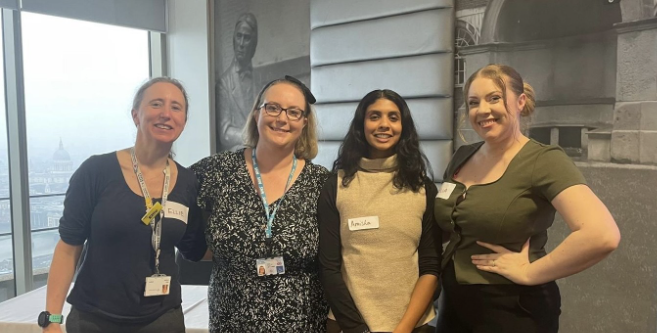
Natasha Allen (Optimisation Workstream Lead at ICHP and Midwife) hosted a lived experience panel discussion titled ‘The Importance of Antenatal Counselling – Looking through the Service User Voice Lens’ which included panellists; Ella Michalski (Neonatal Lived Experience Parent from London ODN PAG) Dr. Ellie Atkins (Lead Clinical Psychologist – London ODN) and Amisha Abeyawardene (Training Coordinator at Birthrights and Doula). The panel explored the realities of receiving support and appropriate counselling in the antenatal and postnatal periods. In this context, ‘Antenatal Counselling’ refers to the conversations that clinicians have with families when they are expecting a preterm birth. Early panel preparations highlighted that even this term can be open to interpretation from a service user lens, with a common view that this refers to the type of counselling that is part of mental health therapy.
Abbie Mason-Woods (Neonatal Lived Experience Parent and Neonatal MNVP Lead Chelsea and Westminster Hospital) was also invited as a panelist, however they were unable to attend on the day and powerfully asked that we share in the space that she was unable to attend as her twins were unwell stating that “being a neonatal parent doesn’t stop at discharge”.
The House of Lords Preterm Birth Committee Report of Session 2024-26, reminds us of the realities that Abbie was sharing here, citing that preterm birth is the leading cause of neonatal and childhood mortality UK, with children born prematurely being at significantly higher risk of having long-term health conditions, physical disabilities and neurodevelopmental conditions. It was a thought provoking and insightful panel discussion followed by an interactive Q&A session.
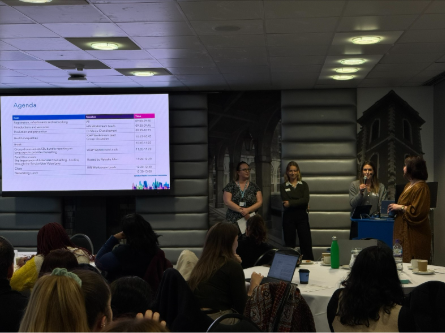
Two key themes emerged strongly from the discussion. First was highlighted by Ella Michalski who reminded us that “…we underestimate the power of small things that make a difference.” when ensuring families feel genuinely seen and heard in their care. Second was recognition of the challenges clinicians face in holding Antenatal Conversations that are grounded in human rights, shared decision-making, and informed choice – particularly within busy and high-pressure clinical environments.
Clinicians spoke candidly about the emotional and practical complexity of delivering life‑changing news to families, and the difficulty of sustaining this standard of communication alongside clinical demands. Yet improvements in how we communicate with families at critical moments can have an immeasurable impact on both outcomes and experiences. Amisha Abeyawardene reminded us that “Informed consent is not the same as a signed consent form.” and that optimal communication is paramount when supporting families to makes decisions in their care. Communication should be afforded the same level of importance as the clinical care itself, with Dr. Ellie Atkins reflecting “…Things that come up in every report: culture and communication. We need to invest in these alongside dashboards.”
Dr. Ellie Atkins shared practical approaches to conducting effective antenatal conversations, which resonated deeply with frontline maternity and neonatal staff. This was reflected in delegate feedback, with the panel discussion cited as one of the most impactful moments of the day.
Impact
The event had 65 attendees from a wide group of stakeholders including Neonatologists, Obstetricians, Psychologists, Midwives, Nurses, Allied Health Professionals, those with lived experience, VCSEs and Doulas and Birthworkers- with full multidisciplinary representation in the room from across many of the London Trusts.
Overwhelming support for more events of this nature convening the system and sharing good practice.
“This is my first PAN London perinatal optimisation event. Continue to deliver these sessions please so more people can attend”
“Amazing!!! We will keep coming back, this is an event I look forward to months ahead!”
98% respondents positively rated their experience of the event as high to satisfactory with 95% rating saying that the event met their objectives
Scalability and next steps
Following overwhelming positive support for this, the ambition is that events will continue to be co-hosted by the pan-London HINs on a quarterly basis over 2026/27.
Partners
This event was a Pan-London region HIN collaboration, which was designed and delivered by the London Optimisation Leads and supporting colleagues. The sessions were facilitated in collaboration with London clinicians, experts by experience and VCSEs.
Our thanks to:
- The Pan-London HIN collaboration team including; Nicky Glover, Zoe Taylor, Jessica Catone, Sonali Tete, Claudia Newton and Natasha Allen
- Dr. Manju Chandiramani
- Ella Michalski (Neonatal Lived Experience Parent from London ODN PAG)
- Dr. Ellie Atkins (Lead Clinical Psychologist – London ODN)
- Amisha Abeyawardene (Training Coordinator at Birthrights and Doula)
- Abbie Mason-Wood (Neonatal MNVP Lead – Chelsea and Westminster Hospital)
Want to learn more? Get in touch with our team
Imperial College Health Partners
- Fazeela Chharawala, Senior Innovation Manager and MatNeo Lead – fazeela.chharawala@imperialcollegehealthpartners.com
- Natasha Allen, Senior Innovation Advisor (Midwife) – natasha.allen@imperialcollegehealthpartners.com
Health Innovation Network South London
- Zoe Taylor, Project Manager – Perinatal Optimisation – zoe.taylor42@nhs.net
- Claudia Newton, Programme Support Officer – hin.pse@nhs.net
UCLPartners
- Nikki Glover, Senior Implementation Manager/Midwife MatNeoSIP lead – Nikki.glover@uclpartners.com
- Jessica Catone, Implementation Manager, MatNeoSIP support – Jessica.Catone@uclpartners.com