
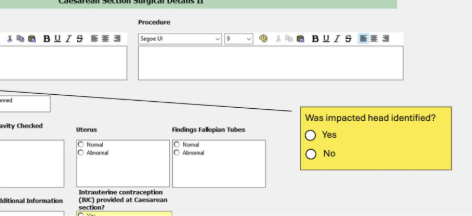
Since August 2026, every caesarean operation note in North West London’s electronic patient record (EPR), Cerner, has included a dedicated proforma for impacted fetal head (IFH). It’s the result of close collaboration between maternity teams across the region, the North West London (NWL) digital team and Imperial College Health Partners (ICHP), delivered through the national Avoiding Brain Injury in Childbirth (ABC) programme.
Why it matters
Impacted fetal head is an obstetric emergency. These births are clinically challenging and can have serious consequences for women and birthing people and their babies. Until recently, there was no nationally agreed definition of IFH and no standardised approach to managing it safely.
Building the proforma into the caesarean operation note, a mandatory record for every caesarean, means every case is documented consistently. Teams can then analyse trends and outcomes, and understand the wider impact on families who experience an impacted fetal head. That insight helps trusts plan future training, target service improvements and deliver safer, more responsive care.
About the ABC programme
The ABC programme is commissioned by the Department of Health and Social Care and delivered by the Royal College of Midwives (RCM), the Royal College of Obstetricians and Gynaecologists (RCOG) and The Healthcare Improvement Studies (THIS) Institute. It was co-designed with service users and healthcare professionals, and aims to reduce brain injury in childbirth by improving clinical practice in two areas:
- Detection of and response to intrapartum fetal deterioration
- Management of impacted fetal head
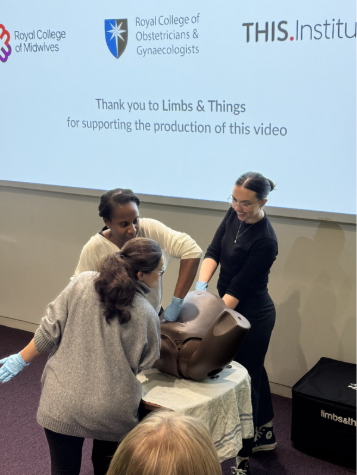
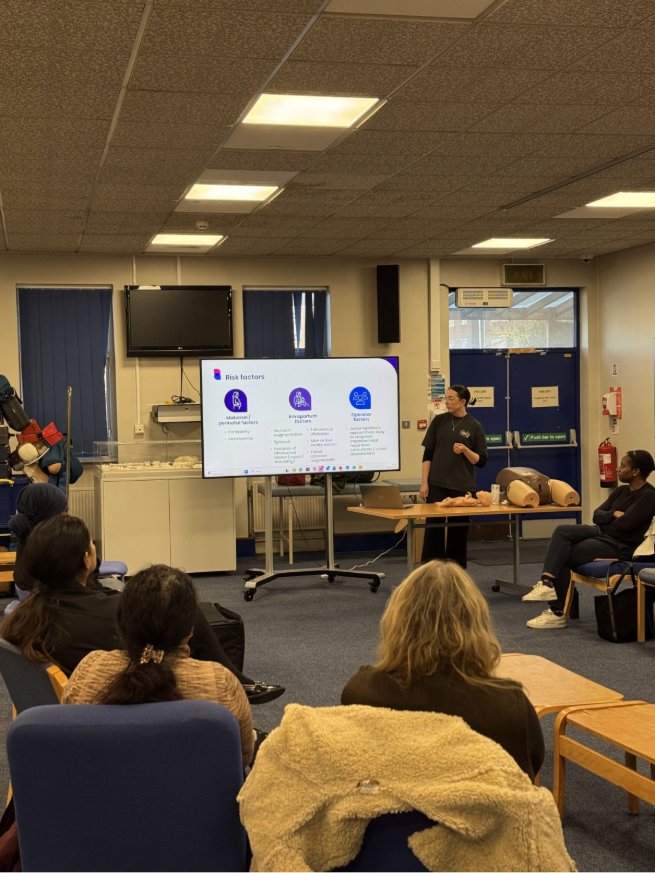
Since late 2025, our ABC team has been working with all trusts across NWL to teach clinicians using the ABC algorithms and proforma, giving them a consistent, evidence-based approach.
How we did it
Working with colleagues in the NWL digital team, we mapped out how the proforma could be built into the Cerner caesarean operation note. Once the build was complete, the NWL digital governance group reviewed and approved it, and the proforma went live in August 2026.
Maternity teams didn’t wait for the digital launch. They used the time to co-create a region-wide standard operating procedure (SOP) for managing and teaching IFH, with the new digital proforma built in so everything would be ready on day one. Each trust’s existing guidelines differed slightly, so teams worked together to agree a shared framework that every hospital could then adapt to fit local practice.
“Having a clear and evidence-based framework to follow gives clinicians the confidence and structure to follow when managing one of the toughest obstetric emergencies. It supports the rapid decision making needed to ensure safe delivery of babies, and I’ve now seen first-hand how valuable this training really is.”
Isabella Luxton, Lead Midwife for the ABC programme, Queen Charlotte’s and Chelsea Hospital
Who led the work
The ABC team in NWL is led by Fazeela Chharawala, Senior Innovation Manager and Mat Neo Programme Lead at ICHP. She works alongside clinical faculty Isabella Luxton, Lead Midwife for the ABC programme and a practising midwife at Queen Charlotte’s and Chelsea Hospital, and Millicent Nwandison, Lead Obstetrician for ABC and a consultant obstetrician at Chelsea and Westminster Hospital. Dr Ololade Obadare, formerly a Senior Innovation Advisor at ICHP, led the ABC programme until recently.
The clinical faculty were instrumental in engaging NWL clinical and governance teams and working with colleagues across NWL to implement this work.
“The development of a North West London-wide impacted fetal head (IFH) SOP and proforma is a significant achievement and demonstrates what can be accomplished when clinicians, maternity teams and improvement partners come together around a shared goal. For the first time, we have a consistent approach across organisations to supporting teams during one of the most complex obstetric emergencies. Equally important is the introduction of a standardised proforma, which will strengthen the quality and consistency of data collected on impacted fetal head events across the region. This will give us a much clearer understanding of incidence, management, outcomes and variation in practice, creating opportunities for learning and continuous improvement. By combining standardised clinical practice with better data, North West London is building the foundations for safer care, improved decision-making and a stronger evidence base to support efforts to avoid preventable brain injuries in childbirth and improve outcomes for mothers and babies.”
Fazeela Chharawala, Senior Innovation Manager and Mat Neo Programme Lead, ICHP
What’s next
With the IFH proforma now live, we’re moving into the next phase of the ABC programme in NWL: improving recognition of and response to intrapartum fetal deterioration. This work will build on the same principles of collaboration, consistency and evidence-based practice to support clinicians and improve outcomes for families across the region.
Find out more
Hillingdon Hospital led the way in creating the IFH standard operating procedure, which has now been shared and adopted across North West London. For more information, please contact the ABC clinical faculty, Isabella Luxton and Millicent Nwandison.