
Partners: Hillingdon Hospitals NHS Foundation Trust
Alignment with three shifts: Analogue to digital

In the five years to March 2024, the average length of stay for patients in NWL hospitals increased by 12%. With this increase in hospital stays, particularly for patients aged 65 and older, delays in discharge often lead to unnecessary bed occupancy days and increased risk of adverse health outcomes.
To address these challenges, the Mission identified innovations that use data science and artificial intelligence (AI) to support predictive length of stay (PLoS). If services can more accurately predict people most likely to be at risk of long length stay (and readmission to hospital) they can implement proactive, intervening support – ultimately reducing the length of stay, optimising resource allocation, and streamlining the discharge process.
ICHP has supported the expansion of OPTICA from its established use in hospital discharge hubs to include Local Authorities (LAs) in NWL – introducing OPTICA in Hillingdon, and Kensington and Chelsea LAs, for use alongside their local hospital discharge hubs. We provided dedicated implementation and training support, including one-to-one and team training sessions.
Following a rigorous discovery phase, in 2024/25 we focused on identifying solutions. Working with Hillingdon Hospitals NHS Foundation Trust, we conducted multiple site visits, engaging clinical and operational leads, including the Chief Medical Officer and Director of Transformation, to test the use cases developed for patient flow and innovations focused on PLoS.
We performed in-depth market scans to inform the Trust’s thinking on the innovative technologies available to support patient flow in this area. With integrated support from ICHP’s Innovation Exchange, we identified an innovation pipeline of predictive tools, narrowed down to four suppliers via enhanced innovation surgeries. These innovators were connected directly with the system via an on-site innovation showcase with frontline staff.
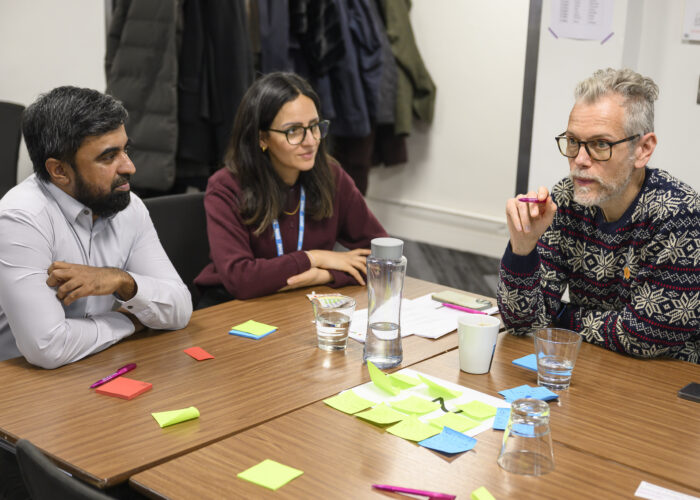
The showcase supported discussions around technology potential, highlighted how other Trusts nationally are tackling this issue, and allowed both NHS staff and innovators to better understand the feasibility for adoption of this kind of technology in NWL.
A real barrier to spreading and scaling innovation in this area is funding. We have therefore worked to identify funding sources to support implementation and scale – successfully securing £100,000 of funding from NWL ICB. In 2025/26 we’re focussed on testing and evaluating the chosen solution via selected Implementation Sites.