
Partners: NWL ICB, Connect Health, PCNs across Brent, Harrow, and Hammersmith & Fulham
Alignment with three shifts: Sickness to prevention, Hospital to Community

Around 15.5 million people in England (34% of the population) have chronic pain. Despite limited evidence, opioids are commonly used for management of non-cancer chronic pain, leading to dependency and increased mortality. In NWL, approximately 750 people are currently prescribed high-dose (>120mg OME/day) opioids for 3 months or longer.
As part of the National Opioid Safety Improvement Programme, ICHP, in partnership with the NWL ICB and Connect Health, delivered a training programme for primary care staff ‘at scale’, in order to support people in our region with chronic pain to live well and focus on what matters to them, whilst reducing the risk of harm from medication.
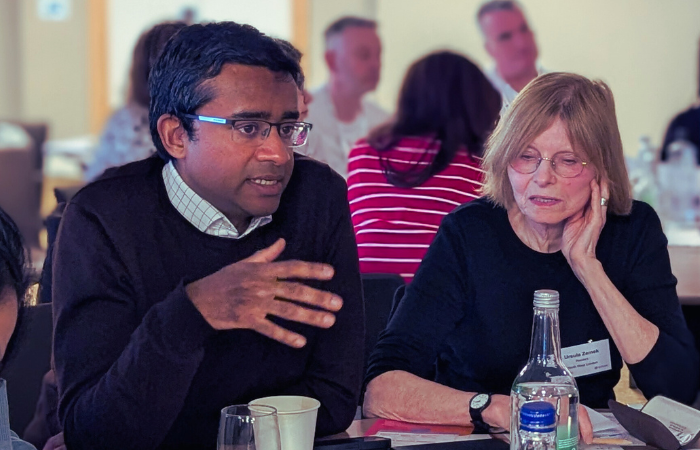
This clinician engagement and upskilling was delivered via education events and health coaching training. The programme was originally piloted in Hammersmith & Fulham, with engagement from four PCNs in the patch. The model was then scaled to Brent and Harrow, with tailored support offers and bi-monthly groups established to share learning, address challenges, and support implementation.
Practice-based training was delivered to GPs, pharmacists, nurses, and other health care professionals, with regular borough-level multidisciplinary team meetings held to support case discussions and shared learning. We also developed a repository of tools, templates, and referral pathways to support consistent adoption.
We ran 18 training events in total, with 280 attendees from PCNs across the three boroughs, who have a total population affected by opioids of over 5,000.
This approach has embedded learning in PCNs, rather than hospitals, supporting community-based care, and aligning with the broader NHS shift from hospital to community. Nationally this programme is anticipated to reduce opioid-related deaths and improve outcomes for approximately 12% of adults living with high-impact chronic pain.
There is very little evidence for the use of opioids in chronic non-cancer pain, and we estimate that for every 62 patients with chronic pain who can be supported with alternatives to long-term opioid analgesia, 1 life can be saved.
In 2025/26, the ambition is to further rollout this approach to other NWL boroughs.
“ICHP has led on convening the steering group, bringing in partners with experience from other ICBs, networking, developing a website repository for programme materials, a comms and engagement plan, organising health coaching training and primary care teaching sessions.” - Dr Ian Bernstein, Senior Responsible Officer and Musculoskeletal Physician