
Driving safer outcomes through collaboration and innovation

When extremely preterm infants are born outside of tertiary centres and transferred postnatally, the consequences can be devastating. Infants delivered outside of these specialist centres are at significantly higher risk of death and severe brain injury. Research shows:
- Postnatal transfers increase the risk of severe brain injury by 31% (Shipley et al., 2022)
- Odds of severe brain injury double when transferred within 48 hours postnatally (OR 2.32) (Watson et al., 2020)
Right Place of Birth is a part of the Optimisation care bundle interventions, with a focus on ensuring babies delivered < 27 weeks or with an expected birth weight of under 800g (less than 28 weeks for multiple birth) should be born in a maternity service with a designated NiCU. March 2025 showed North West London (NWL) had 82.3% compliance with Right Place of Birth , 3% below the national average.
Background
On 23 June 2025, the London Health Innovation Networks (Imperial College Health Partners, UCLP, and HIN South London) hosted an Optimisation Event for the midwifery and neonatal teams across all the Trusts. This learning event focused on In Utero Transfers (IUTs) – an area identified by Trusts as needing urgent attention – and aimed to improve understanding of IUT performance in London, explore opportunities for system-level improvement, and share updated guidelines.
This event was an interactive half-day programme, with action-oriented sessions focused on the current landscape of IUTs across London. The agenda was designed to facilitate meaningful discussion around the challenges and successes experienced by NHS Trusts in implementing innovative approaches to IUTs. Attendees were encouraged to share insights, exchange best practices, and reflect on learnings that could be applied within their own organisations to drive service improvement.
The aims of this event and continuing collaboration were:
- To improve IUT pathway efficiency and communication across London
- To support local systems in identifying actionable changes using the Moments tool (ICHP-led facilitation)
- To introduce digital innovators (Pocketalk, Upskill) to improve staff training and patient communication with non-English speakers.
- To increase the proportion of extremely preterm infants delivered in appropriate tertiary centres.
Why this matters:
By ensuring more extremely preterm babies are born in the right place, we can reduce
preventable brain injuries and neonatal mortality. For service users, the end goal is safer birth outcomes for extremely preterm infants, equitable access to tertiary care, and improved communication with non-English speaking families.
This aligns with the broader shift in healthcare from system-led decisions to person-centred care, ensuring that clinical pathways reflect what matters most to families, not just what is operationally feasible. By embedding tools like Pocketalk, we also begin to address health inequalities by improving communication with non-English speaking families, who often face barriers to timely and informed care.
Method
This project was a collaborative effort between the London Health Innovation Networks, working closely with Trusts across London. London HINs convene fortnightly to align on shared priorities, which has enabled the planning of three Pan-London Optimisation Events for the financial year – this IUT-focused event was the first.
ICHP led on the design and facilitation of the event, using its strengths from the OLS (Office for Life Sciences) commission to bring impactful, relevant innovations into the optimisation space. We applied our expertise across:
Embedding innovation directly into the room: This was the first time that healthcare innovators were embedded into the session to directly engage with system partners – an approach that received positive feedback from attendees. By introducing innovators at the right time, in the right context, the session demonstrated how technology can directly support clinical priorities.
Structured reflection and facilitation: We brought technical and facilitation expertise, using the Moments tool to help Trusts reflect on what to start, stop, and continue in order to improve IUTs. This structured approach supported Trust representatives to think critically and collaboratively about what actions to start, stop, and continue to improve IUT processes across London. Moments is a practical framework developed to support teams in exploring not just whether processes are in place, but whether they are being used with the right meanings and values. It helps surface the everyday behaviours and decisions that shape safety culture, encouraging teams to reflect on what matters most in real-time care delivery.
This approach shifted thinking from “do we have the right processes?” to “are we doing the right thing for this mum and baby?”. For example, instead of asking whether we have capacity to accept another hospital’s patient, teams were encouraged to consider: What would we do if this mother and baby walked into our maternity triage or A&E?
This framework enabled participants to:
- Reflect on current challenges in IUT coordination and delivery
- Share learning across Trust boundaries
- Identify practical next steps that are system-focused and achievable
The facilitated discussion was pivotal in shifting the focus from issue identification to action planning. It also allowed frontline and managerial staff to co-produce ideas for system change – anchored in real-time data and service-level experiences.
This approach reflects the fourth shift in healthcare transformation: moving from provider-led systems to people and communities. By focusing on meaning, values, and lived experience, the Moments framework supports more equitable and compassionate decision-making.
Convening the right people to address challenges: This event brought together clinicians, managers and innovators to tackle one of the most urgent challenges in neonatal care. By leveraging real-time data, collaborative reflection through the Moments framework, and the introduction of digital innovations, the session laid the foundation for measurable system-wide improvement.
Innovators in action:
Two digital innovations were showcased during the session, directly addressing frontline challenges:
- Pocketalk: This language-bridging technology supports communication with non-English speaking patients – a critical factor in explaining care decisions around IUTs and reducing health inequalities. By enabling clearer, more inclusive conversations, Pocketalk helps ensure that all families (regardless of language) can engage meaningfully in decisions about their care.
- Upskill: This immersive learning digital training platform uses AI avatars and VR simulations to build clinical confidence and address workforce capability.
Results
Key Outcomes:
- The Moments session helped Trusts clarify improvement priorities, including better pre-transfer communication, enhanced referral pathways, and improved education and communication strategies – particularly for non-English speaking mothers.
- Through the event, Maternity and Neonatal teams were exposed to practical innovations that could improve care delivery. This has already led to one NWL Trust piloting Pocketalk from September, demonstrating early adoption and momentum from the session.
Population Impact:
The event sits within a wider MatNeo workstream focused on improving outcomes for extremely preterm infants (<28 weeks or <800g), a group for whom timely and appropriate in-utero transfers (IUTs) are critical to survival and reducing the risk of severe brain injury.
The urgency and relevance of this work are underscored by recent data: in March 2025 alone, 96 IUT-related cases were recorded in NWL. This volume highlights both the scale of the challenge and the timeliness of the intervention, reinforcing the need to address systemic barriers and improve coordination across services.
System-Level Impact:
This work catalysed collaboration across London’s maternity and neonatal systems, sparking new conversations and tangible next steps at both strategic and operational levels. By aligning efforts through the London Health Innovation Network, the project created a space where innovations and ideas could cascade down to frontline teams – supporting more consistent and equitable care for a highly vulnerable population.
The event delivered clear benefits for Trusts, innovators, and ultimately patients:
- For Trusts and staff: Clarifying improvement priorities, including better pre-transfer communication, enhanced referral pathways, and improved education and communication strategies – particularly for non-English speaking mothers.
- For innovators: A direct platform to understand system needs, receive feedback, and test solutions with frontline teams. One of the innovations also confirmed a pilot in NWL as a result of this event.
- For patients: Implementation of a more coordinated approach and pathway aimed at preventing brain injuries and reducing associated mortality rates.
Next steps
Trusts have taken away clear, actionable ‘Start, Stop, Continue’ priorities to discuss and begin implementing within their local teams.
Pocketalk will begin a pilot in September with one of the four NWL Trusts, testing its impact on communication with non-English speaking mothers.
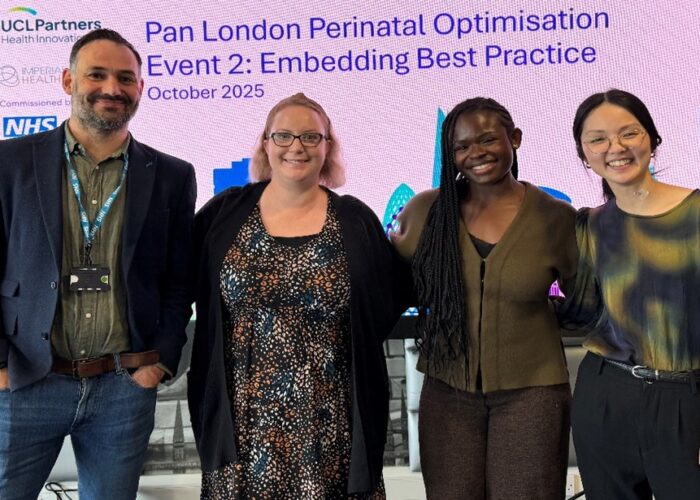
The next Pan-London Optimisation Event is planned for early October 2025, with all London Trusts invited. This project is designed to be sustainable by embedding learning and innovations into existing Trust processes and through continued collaboration via the London HINs every quarter. Future events will build on this foundation, continuing to drive improvement across priority areas in maternity and neonatal care.
By strengthening coordination of in utero transfers, we are not only reducing preventable harm for the most vulnerable babies but also ensuring safer, more equitable care for families across London.
Partners
Thank you to the NWL Integrated Care Board, the London Health Innovation Networks, and staff at all trusts across London who took part.
Find out more
Get in touch with Matthew Wyatt, Senior Innovation Manager, at Matthew.Wyatt@imperialcollegehealthpartners.com